Tour 1 of 5
The body in motion
From Kókó Jaspar’s dance class to the large canvases: movement becomes painting.
≈ 2 min · 6 works
In 1987 and 1988, Roland Buraud drew every week at Kókó Jaspar’s dance class. From these hundreds of drawings came the red period, then Le Printemps: four years of research on movement.
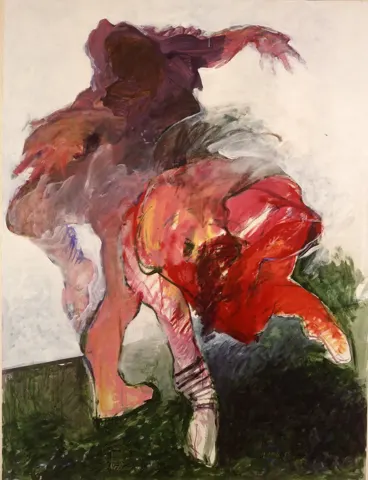
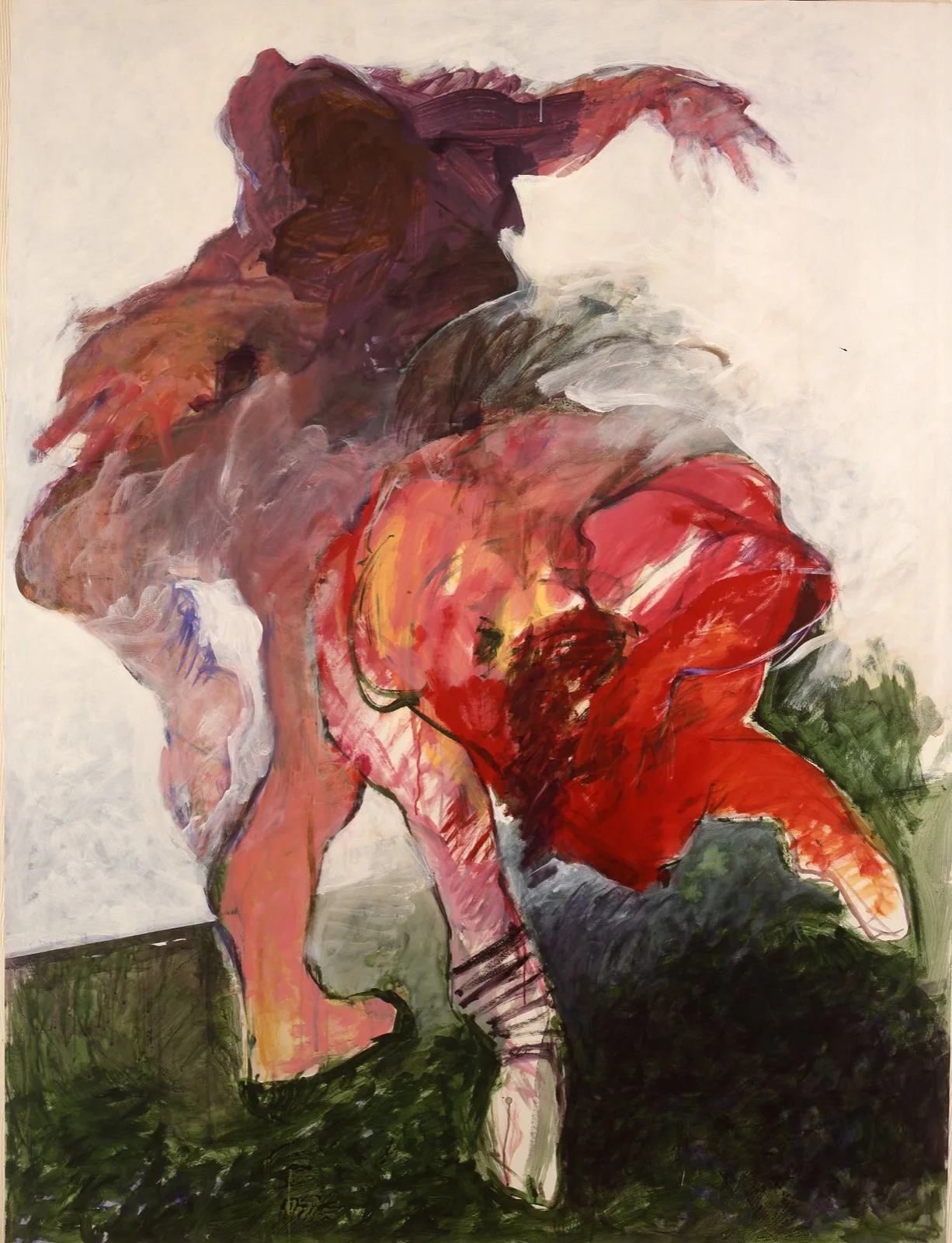
Heures Jaspart I (Jaspart Hours)
1989 · 195 × 150 cmOil on canvasImage: Archives Roland Buraud · All rights reserved · estate of Roland BuraudHeures Jaspart I, 1989. The drawings from the class move onto canvas: this is the red period, marking the painter’s return to large formats after 1986.
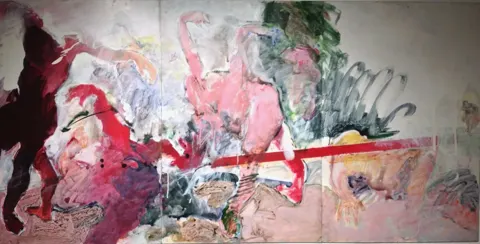
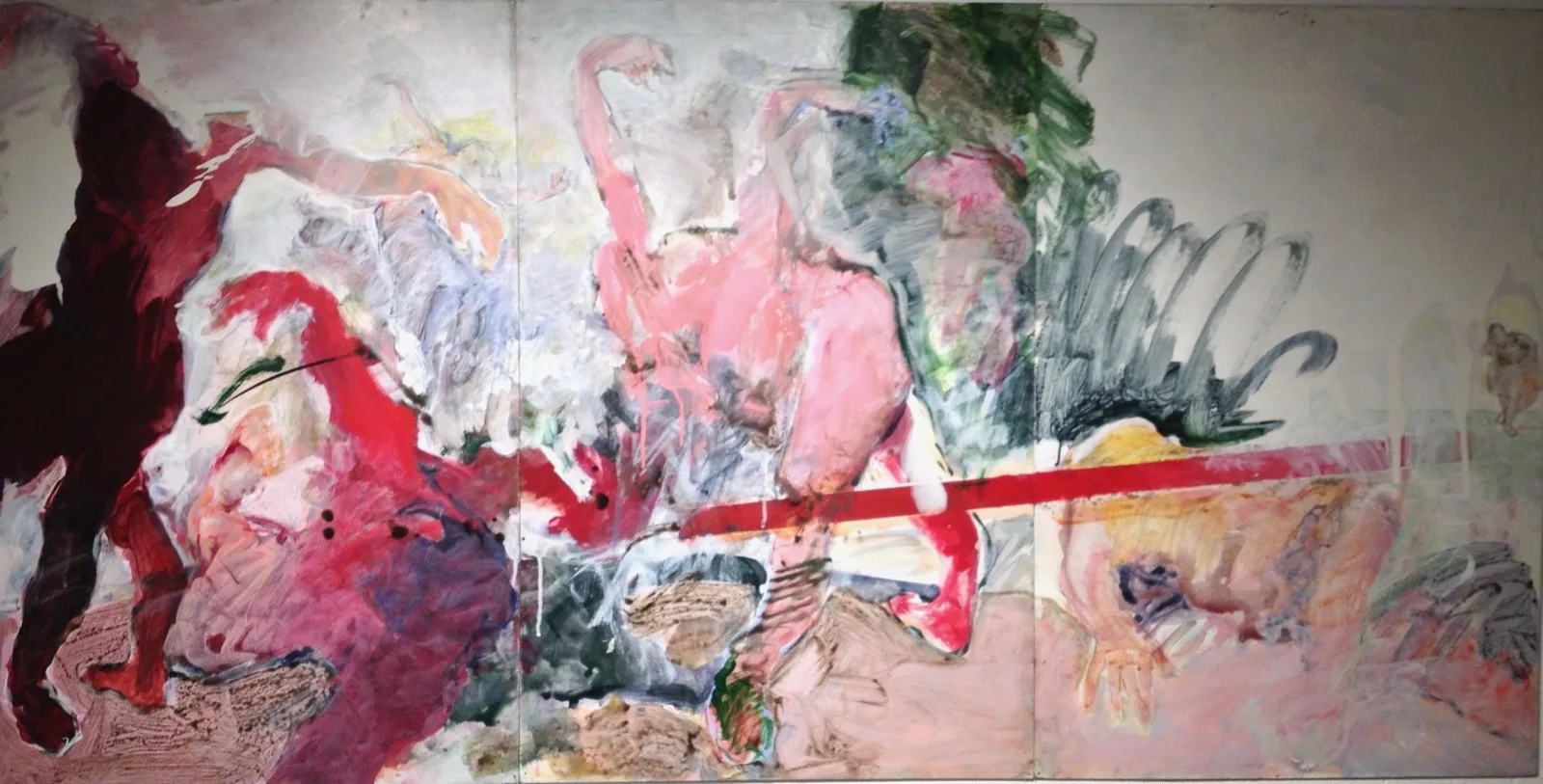
Red triptych
1988–1989Oil and acrylic on cardboardImage: Archives Roland Buraud · All rights reserved · estate of Roland BuraudRed Triptych, 1988 – 1989, oil and acrylic on cardboard. Three panels for a single movement, which the eye follows from left to right.
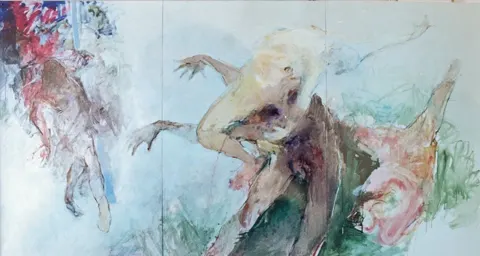
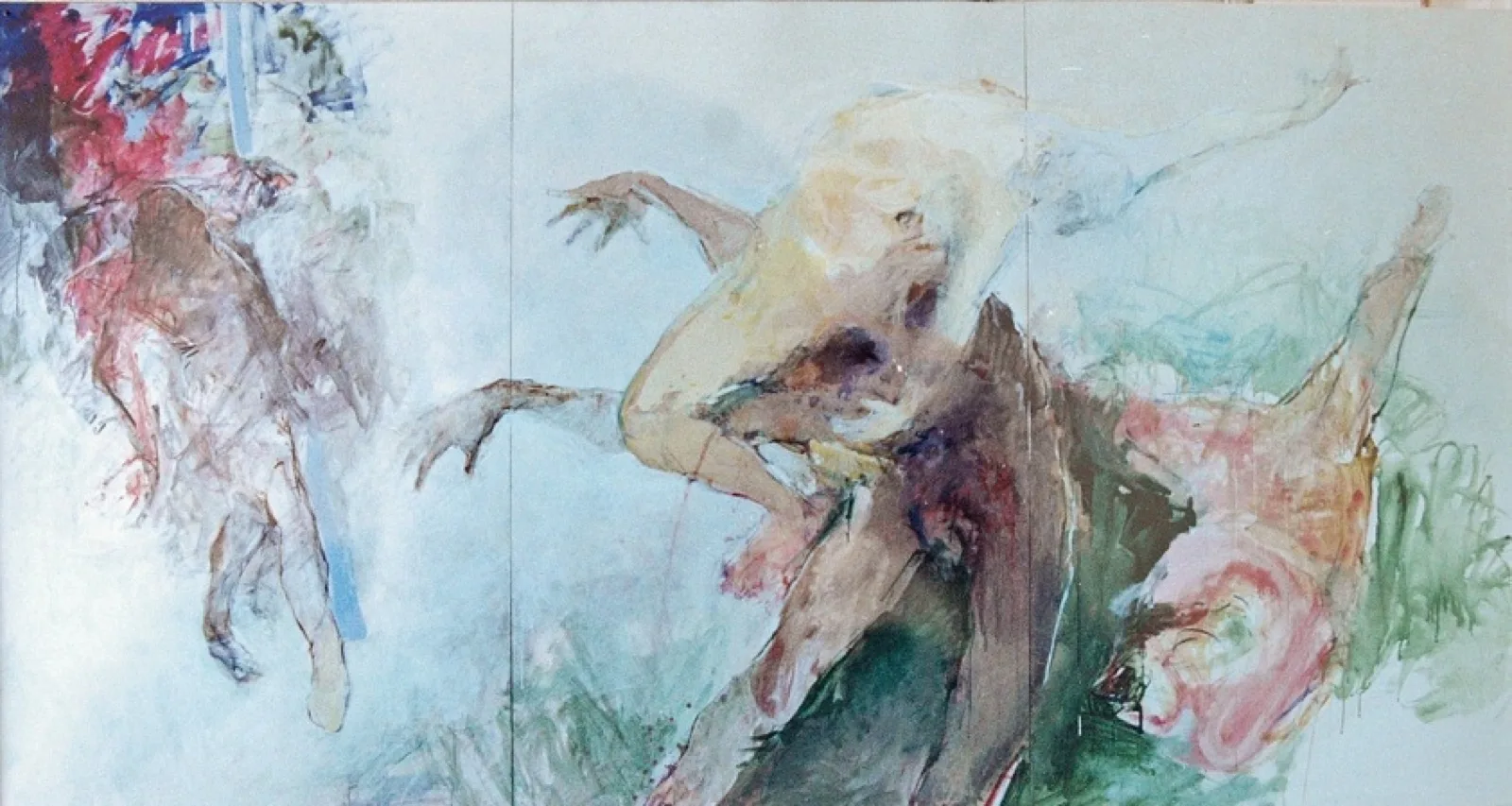
Le Printemps (Spring)
1990 · 200 × 390 cmAcrylic on canvasImage: Archives Roland Buraud · All rights reserved · estate of Roland BuraudLe Printemps, 1990: the first triptych painted in the Bastille studio, the culmination of four years of research on dance movement.
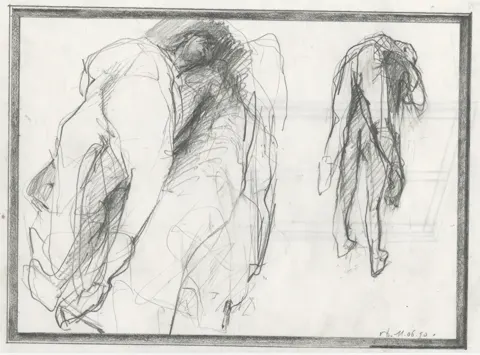
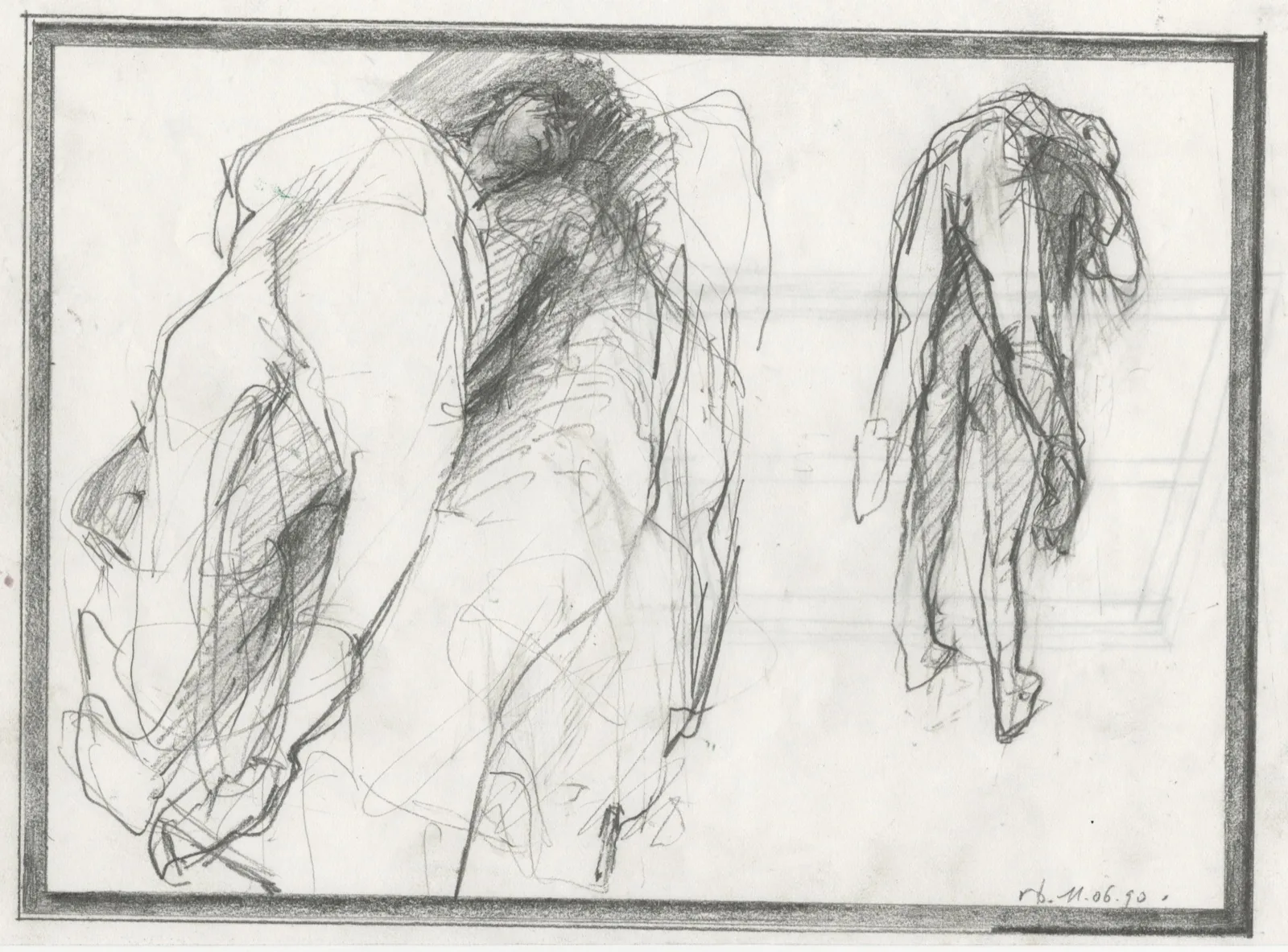
Study for “Soft Love in a Loft”
1990 · 21 × 29,7 cmGraphiteImage: Archives Roland Buraud · All rights reserved · estate of Roland BuraudA graphite study for Soft Love in a Loft, 1990: the drawing prepares the canvas by finding the place of each body.
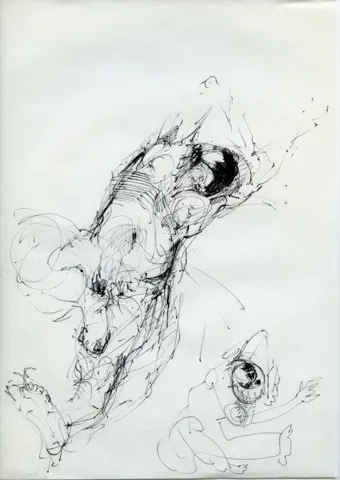
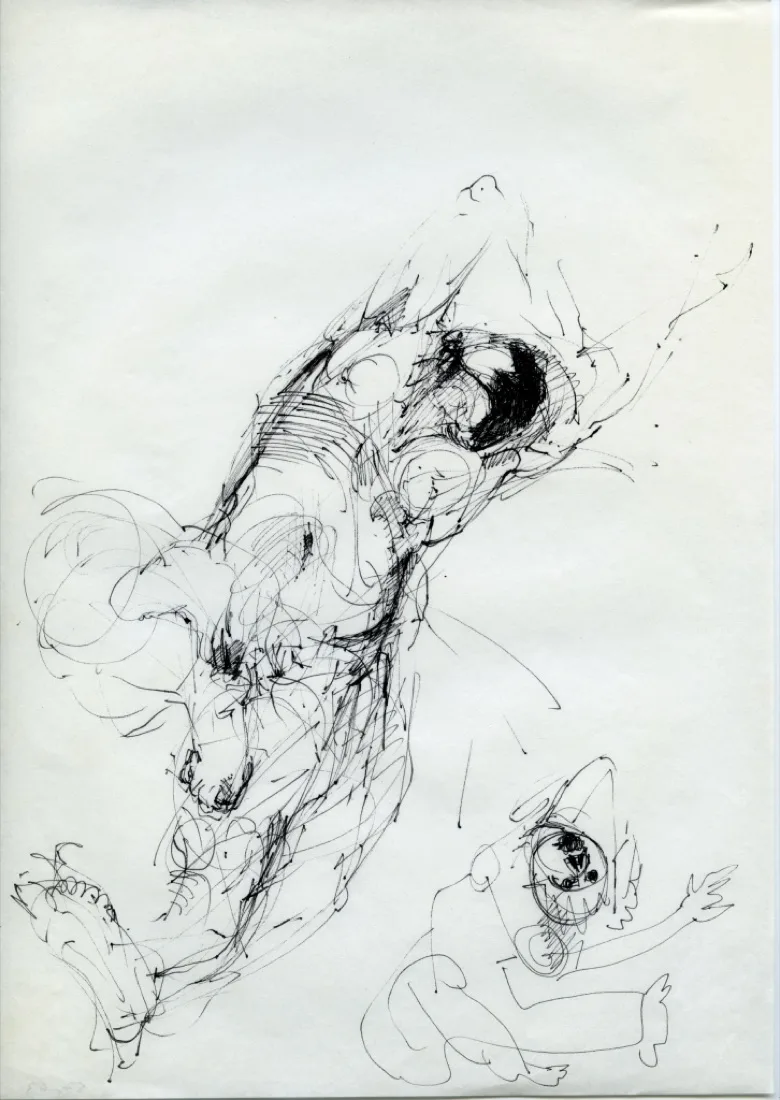
Untitled
1987–1988Graphite on paperImage: Archives Roland Buraud · All rights reserved · estate of Roland BuraudA dance drawing in graphite, made during the class. There are about eight hundred of them: the line follows the bodies to the rhythm of the music.
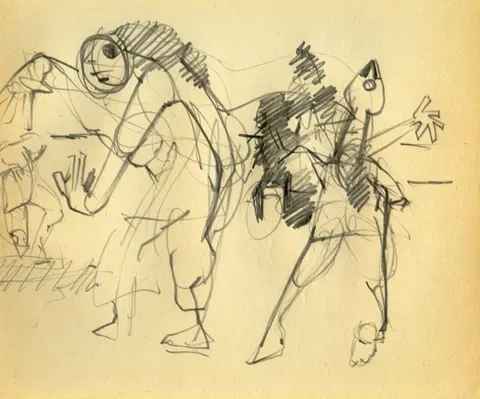
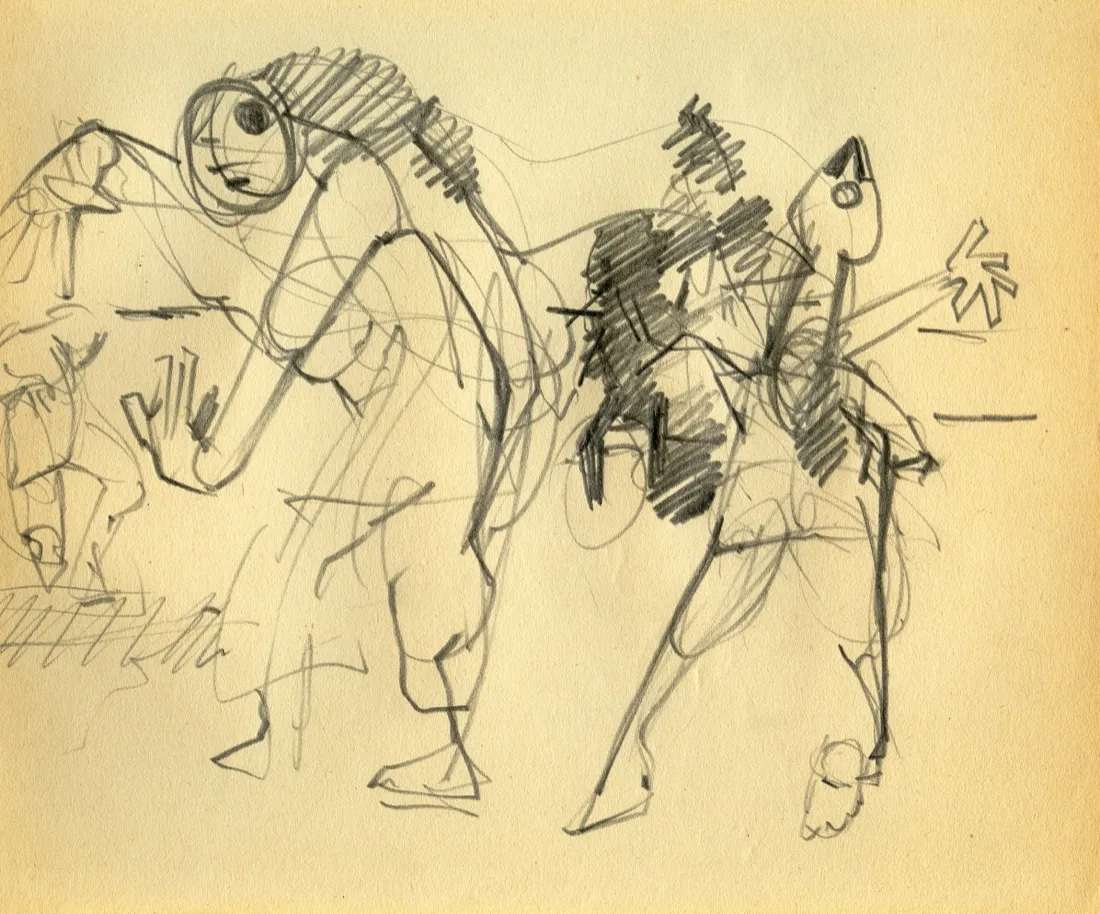
Untitled
1987–1988Graphite on paperImage: Archives Roland Buraud · All rights reserved · estate of Roland BuraudA “one-second sketch”: the fastest possible drawing, to catch a gesture before it vanishes.
End of the tour
The dancing body would never leave Roland Buraud’s painting. Hundreds of sheets from the dance class are gathered in the Drawing Cabinet.